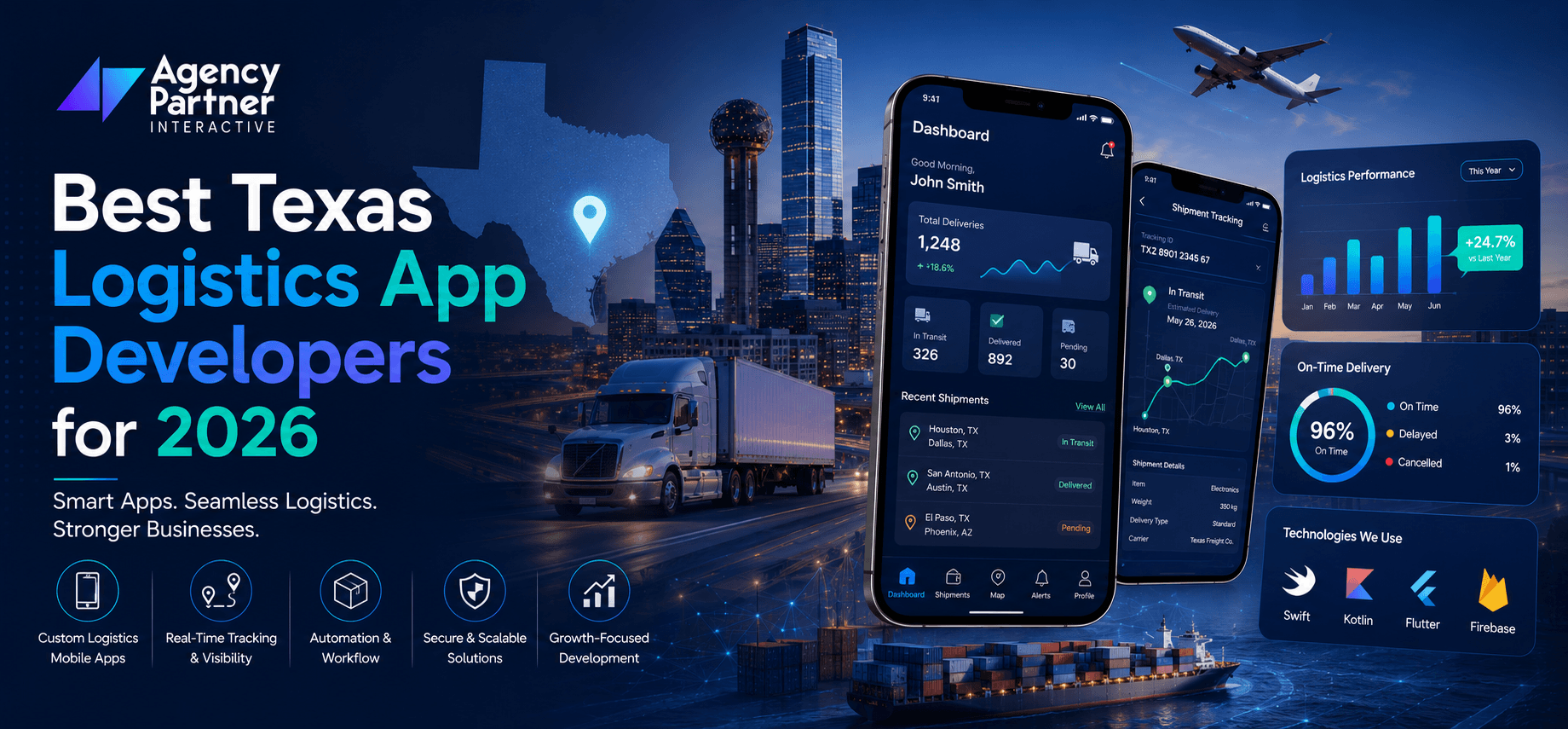
Texas runs on freight. The Dallas–Fort Worth intermodal hub, Houston’s ports and energy corridor, San Antonio’s distribution growth, and the I-35 cross-border lanes into Mexico make this one of the most logistics-dependent economies in the country. For operators here, the right driver app, dispatch tool, or tracking platform isn’t a nice-to-have — it’s the difference between protecting margins and losing freight to a faster competitor.
But finding the right partner is harder than it should be. Most “Texas logistics app developer” lists online are padded with firms that aren’t in Texas at all — or that build generic apps with zero freight experience. This guide fixes that. Below is a vetted, ranked list of mobile app development companies with genuine Texas roots and real logistics, fleet, and supply chain work, plus the selection criteria to shortlist vendors fast.
Quick answer: who should you shortlist?
If you want a Texas-headquartered, full-service partner that designs, builds, integrates, and supports logistics apps end to end, Agency Partner Interactive is the strongest starting point. For freight-specific platform work — TMS, dispatch, and fleet systems — DirectX MGT and Developer Bazaar Technologies bring deep domain focus. For fleet and on-demand logistics apps with a Dallas presence, iQlance and BitsWits are worth a call. Your best pick depends on whether you need a single accountable partner or a niche freight-software specialist.
How to evaluate a logistics app development partner
Logistics apps fail for reasons consumer apps never face — patchy rural connectivity, hours-of-service rules, telematics that won’t sync. Score every vendor on the criteria that actually matter for transportation:
- Genuine logistics domain experience. Have they built TMS, dispatch, fleet, or driver apps before — or just retail and lifestyle apps? Ask for freight-specific examples, not a generic portfolio.
- Real Texas presence. A local team understands DFW freight density, port workflows, and cross-border compliance. Watch out for directory listings that tag overseas firms as “Texas.”
- Integration depth. Your app has to talk to ELD/telematics, TMS, WMS, ERP, and GPS systems. Integration is where most logistics builds live or die.
- Offline reliability. Drivers lose signal. The app must capture data offline and sync cleanly when connectivity returns.
- Security and compliance. Look for SOC 2 or ISO practices, DOT/FMCSA awareness, and secure handling of location and customer data.
- Ongoing support. Fleets can’t tolerate downtime; confirm a real post-launch maintenance and DevOps plan, not just a handoff.
At-a-glance comparison
| Company | Texas Presence | Best For | Logistics Strengths | Full-Service + Support |
|---|---|---|---|---|
| Agency Partner Interactive | HQ in Plano (DFW) | End-to-end logistics & transportation apps | Driver apps, tracking, integrations, web + mobile | Yes (in-house DevOps) |
| DirectX MGT | Texas | Freight-software specialists | TMS, fleet, dispatch automation, WMS | Partial |
| Developer Bazaar Technologies | Serves Texas (DFW/Houston) | Custom freight platforms | TMS/WMS, route optimization, driver apps | Yes |
| iQlance | Dallas office | Fleet & on-demand logistics apps | Fleet tracking, on-demand delivery apps | Yes |
| BitsWits | Dallas | Logistics software + IoT | Route optimization, WMS, IoT/mobile scanners | Yes |
The best Texas logistics app developers in 2026
1. Agency Partner Interactive — best end-to-end Texas logistics app partner
Agency Partner Interactive (API) is headquartered in Plano, in the heart of the DFW logistics corridor, and offers exactly what most transportation leaders actually need: one accountable Texas team that handles strategy, design, development, integrations, and ongoing support. Rather than coordinating a separate designer, developer, and maintenance vendor, you get the full lifecycle under one roof.
API’s relevance to this sector isn’t theoretical — its client work spans logistics and transportation businesses, including freight and logistics brands, which is the kind of domain proof generic app shops can’t show. Its mobile app development services cover native iOS and Android and cross-platform builds, and its engineering team handles the connective tissue logistics apps depend on — tying driver and dispatch apps into telematics, TMS, and back-office systems through custom software development.
Just as important for fleets that can’t afford a stalled app, API provides ongoing support and DevOps after launch, with a track record of more than 1,800 delivered projects and recognition including Clutch, Inc. 5000, and Google Partner status. You can review the range of delivered work in its project case studies.
Best for: Texas logistics and transportation companies wanting design, build, integration, and support from one local partner. Worth knowing: the full-service model fits operators who want a long-term partner, not a one-off contractor.
2. DirectX MGT — best freight-software specialists
DirectX MGT focuses specifically on custom software for Texas logistics companies, including transportation management systems (TMS), fleet management platforms, dispatch workflow automation, and warehouse management systems. Their pitch is domain depth: freight infrastructure requires operational understanding that generic development firms lack, and they build around a logistics company’s actual workflow rather than forcing a template.
Best for: freight operators that need deep TMS, dispatch, or compliance-tracking systems built around their exact operating model.
3. Developer Bazaar Technologies — best for custom freight platforms
Developer Bazaar Technologies builds custom logistics platforms aimed at the scale and complexity of the Texas freight market — DFW’s intermodal hub, Houston port logistics, and beyond. Their services span custom TMS and WMS, AI-powered route optimization, real-time fleet tracking, last-mile dispatch, mobile driver apps, freight broker platforms, and supply chain visibility.
Best for: logistics companies wanting a broad freight platform with route optimization and driver-app components.
4. iQlance — best for fleet and on-demand logistics apps
iQlance is a mobile and software development firm with a Dallas office that markets logistics and fleet capabilities, including optimized fleet management, real-time driver tracking, and on-demand delivery apps. It’s a reasonable option for transportation brands building consumer- or operations-facing apps that prioritize live tracking and notifications.
Best for: fleet management mobile apps and on-demand delivery products with strong tracking features.
5. BitsWits — best for logistics software with IoT
BitsWits positions itself as a Dallas logistics software development company, building route optimization apps, cloud-based warehouse management systems with IoT sensors and mobile scanners, and last-mile delivery tools. Its emphasis on collaborative development and integrating real-time data makes it a fit for operators modernizing warehouse and delivery workflows.
Best for: warehouse and last-mile operations adding IoT, scanning, and route optimization.
What a strong logistics app actually includes
Before scoping a build, know the feature set that separates a real logistics and transportation app from a generic one:
- Real-time GPS tracking and geofencing for shipments and vehicles.
- Driver apps with route guidance, proof of delivery, e-signatures, and photo capture.
- Dispatch and load management dashboards that assign, monitor, and reroute in real time.
- Telematics and ELD integration for hours-of-service and vehicle diagnostics.
- Offline-first data capture that syncs when signal returns.
- TMS/WMS/ERP integration so the app reflects real inventory, orders, and billing.
- Analytics on miles, fuel, on-time performance, and driver behavior.
Getting these right depends as much on workflow design as on code, which is why strong UI/UX design — built for a driver glancing at a phone in a moving cab, not a desk user — matters more in logistics than in almost any other category.
Fleet management vs. supply chain visibility: which build do you need?
These overlap, but they solve different problems, and naming yours up front speeds up vendor selection.
Fleet management mobile apps focus on vehicles and drivers: live location, route optimization, maintenance scheduling, fuel tracking, and driver safety. The payoff is fewer wasted miles, lower fuel spend, and tighter compliance. If your pain is operational efficiency on the road, this is your starting point.
Supply chain software development widens the lens to the whole goods journey: inventory across warehouses, supplier coordination, order and shipment visibility, and exception alerts when something slips. The payoff is fewer stockouts, better forecasting, and end-to-end transparency for customers. If your pain is visibility across partners and locations, prioritize this.
Many Texas operators ultimately need both, connected — which is where a partner comfortable across web and mobile app development and the industries it serves has an edge. API’s industries overview breaks down how transportation requirements differ from other sectors.
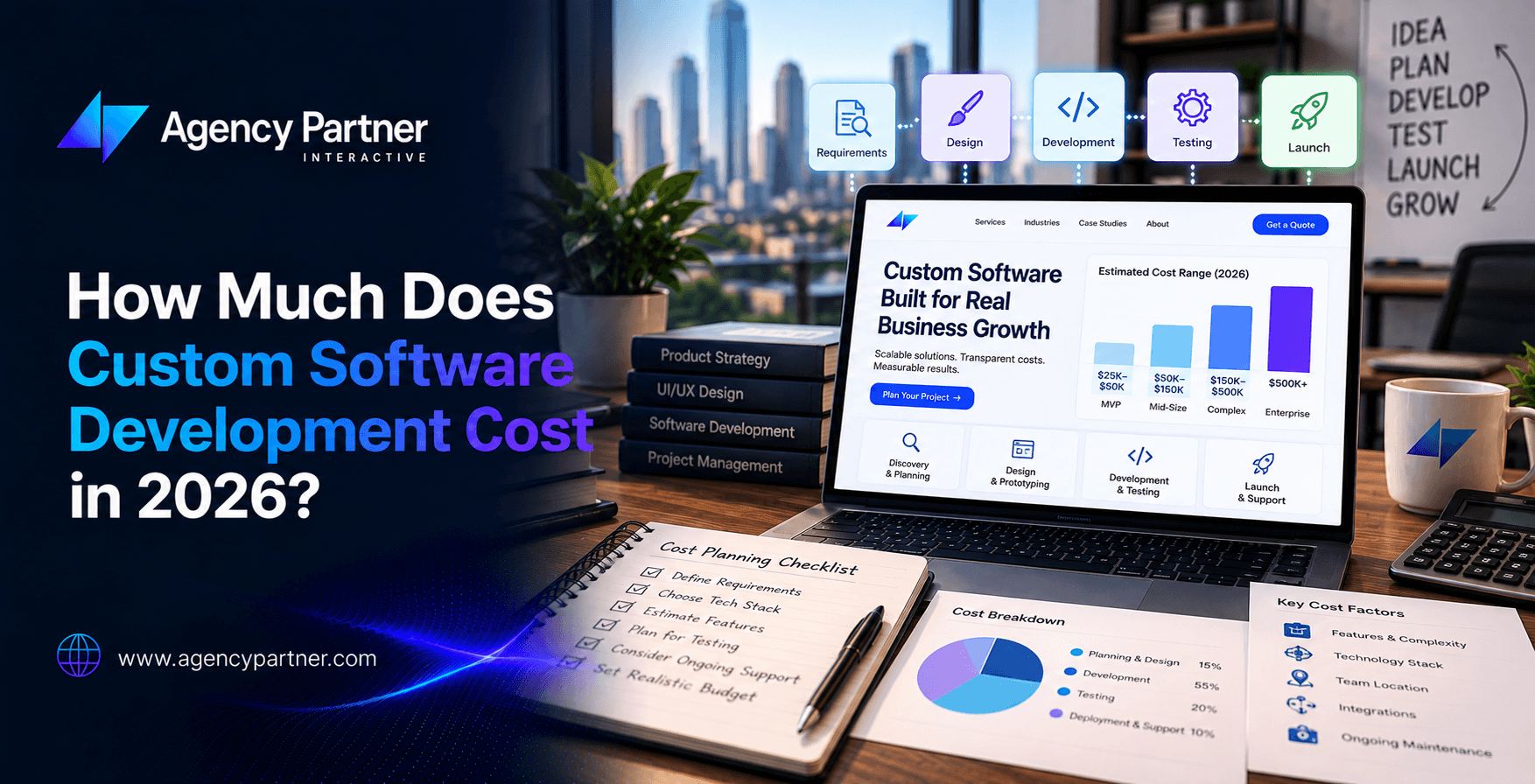
What does logistics app development cost in Texas in 2026?
Pricing varies with complexity and integration scope, but useful benchmarks look like this:
- Single-purpose app (e.g., a driver or proof-of-delivery app): roughly $40,000–$90,000.
- Fleet or dispatch platform with telematics and TMS integration: $90,000–$250,000+.
- Full logistics ecosystem (driver app + dispatch + supply chain visibility + integrations): $250,000 and up.
- Ongoing support and maintenance: typically a monthly retainer scaled to fleet size, uptime needs, and release cadence.
Texas-based hourly rates generally run higher than offshore directory listings advertise — but local domain experience, integration reliability, and responsive support usually cost far less than rebuilding a failed offshore project. Clarify exactly what’s included before comparing quotes.
How to shortlist fast
- Name your build. Fleet app, dispatch platform, or supply chain visibility — clarity narrows the field instantly.
- List your integrations. ELD/telematics, TMS, WMS, ERP. This single list eliminates unqualified vendors.
- Demand freight proof. Ask for logistics case studies with outcomes, not a generic app portfolio.
- Verify Texas presence. Confirm a real local team rather than a directory listing.
- Run a paid discovery phase. A short scoping engagement reveals how a vendor thinks before you commit to a full build.
Reviewing a partner’s values and approach is also a fast way to gauge whether they’ll operate as a true partner or just a code shop.
Frequently asked questions
Q. What should I look for in a logistics app development company in Texas?
Prioritize genuine logistics domain experience (TMS, fleet, dispatch, or driver apps), a real Texas-based team, proven integration with telematics and back-office systems, offline reliability, and a clear post-launch support plan. Be cautious of directory lists that label overseas firms as “Texas.”
Q. How much does a logistics or fleet management app cost?
A single-purpose app typically runs $40,000–$90,000, while a fleet or dispatch platform with telematics and TMS integration ranges from about $90,000 to $250,000 or more, depending on complexity and integrations.
Q. How long does it take to build a logistics app?
A focused driver or tracking app can take a few months; a full fleet or supply chain platform with multiple integrations often takes six months or more. Integration scope and decision speed drive the timeline.
Q. What’s the difference between fleet management apps and supply chain software?
Fleet management apps focus on vehicles and drivers — tracking, routing, maintenance, and compliance. Supply chain software focuses on the broader goods journey — inventory, suppliers, and shipment visibility. Many operators eventually connect both.
Q. Why choose a Texas-based developer over an offshore firm?
A local team understands Texas freight density, port and cross-border workflows, and U.S. compliance, and offers responsive support across compatible time zones — which typically reduces risk and rework on complex logistics builds.
Ready to build a logistics app that performs in the field?
The right partner combines genuine freight experience, a local Texas team, and the ability to design, build, integrate, and support your app long after launch. If you’d like that handled end to end, talk to an expert at Agency Partner Interactive to scope your logistics app and integrations.