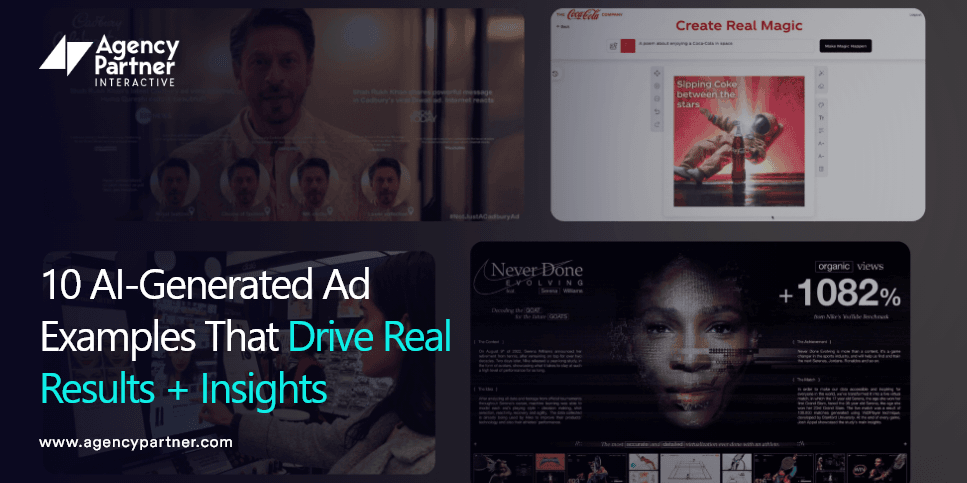
AI is no longer a behind-the-scenes optimization tool in advertising. In 2026, it has become a visible creative force shaping how ads are written, designed, personalized, and scaled. Brands that once relied on manual testing cycles are now launching high-performing campaigns using AI advertising as a core capability rather than an experiment.
What makes this shift especially important is that AI-generated ads are no longer generic or robotic. When executed properly, they are strategic, data-informed, and often outperform traditionally produced creatives. From generative AI advertising to fully automated AI ad campaign workflows, artificial intelligence is redefining what effective advertising looks like.
This blog breaks down ten real-world AI generated advertisements patterns that are driving results today, along with insights into why they work and how brands can apply them responsibly and effectively.
Why AI Advertising Is Reshaping Creative Strategy?
Traditional advertising relied heavily on intuition, experience, and long testing cycles. While these elements still matter, AI advertising introduces a new advantage: scale with intelligence. AI systems can analyze performance patterns across thousands of variations, learning what resonates with specific audiences faster than any human team could.
Modern AI powered ads are built on behavioral data, contextual signals, and predictive modeling. This allows brands to move beyond static messaging and into adaptive storytelling. As a result, artificial intelligence advertising campaign strategies are now focused less on single creatives and more on systems that continuously evolve.
The key shift here is not automation alone; it is decision-making speed and precision.
Example 1: Personalized AI Generated Ads for E-Commerce Retargeting
One of the most effective uses of AI generated ads is personalized retargeting. Instead of showing the same creative to every returning visitor, AI dynamically adjusts copy, visuals, and offers based on browsing behavior.
These AI advertising campaigns often outperform manual retargeting because they reflect real-time intent. When a shopper sees an ad that mirrors exactly what they explored moments earlier, relevance increases dramatically. This is a clear example of AI powered ads turning data into timely persuasion rather than generic reminders.
Example 2: Generative AI Advertising for Dynamic Product Launches
Product launches traditionally require weeks of creative preparation. Generative AI advertising compresses that timeline significantly. Brands now generate dozens of ad variations tailored to different platforms, audiences, and messaging angles within hours.
These generative AI ads work because they allow rapid experimentation without creative burnout. Instead of choosing one “perfect” message upfront, brands let performance data guide which variations scale. This approach transforms an AI ad campaign into a living system rather than a fixed launch.
Example 3: AI Commercials That Adapt by Audience Segment
Video advertising has historically been expensive and difficult to personalize. AI commercials change that by dynamically adjusting scripts, visuals, and pacing based on audience segments.
Using artificial intelligence ads, brands can create multiple versions of a single commercial optimized for different demographics, locations, or behaviors. This personalization makes AI advertising far more efficient, especially in competitive paid media environments where relevance determines success.
Example 4: AI Advertising Campaigns Optimized in Real Time
One of the strongest advantages of AI advertising campaigns is their ability to optimize while running. Instead of waiting for post-campaign analysis, AI systems continuously adjust bids, creatives, and placements based on performance signals.
These adaptive AI ad campaign models reduce wasted spend and improve consistency. Over time, the system learns which combinations drive results, making future campaigns smarter from day one. This is where AI advertising moves from creative support to strategic infrastructure.
Example 5: Artificial Intelligence Advertising Campaigns for Lead Generation
Lead generation ads benefit heavily from AI-driven experimentation. Artificial intelligence advertising campaign frameworks test messaging angles, headlines, and calls to action at scale, identifying what motivates action across different user segments.
When paired with CRM and conversion data, AI generated advertisements can prioritize not just clicks, but qualified leads. This makes AI powered ads particularly effective for B2B, SaaS, and high-consideration industries where quality matters more than volume.
Example 6: Generative AI Ads for Social Media Scaling
Social platforms demand constant creative refreshes, which is difficult to sustain manually. Generative AI ads solve this problem by producing ongoing variations aligned with brand tone and performance insights.
These AI generated ads are not random. They are informed by engagement data, platform behavior, and creative fatigue signals. As a result, generative AI advertising helps brands maintain relevance without sacrificing consistency or quality.
Example 7: AI Powered Ads for Search and Performance Max
Search advertising has also been transformed by AI powered ads. Modern platforms now rely on AI to generate headlines, descriptions, and asset combinations automatically.
When guided by strong strategy and inputs, these AI advertising campaigns outperform static keyword-based ads. AI evaluates intent signals and assembles the most relevant messaging in real time, making artificial intelligence ads more responsive to user needs.
Example 8: AI Generated Advertisements for Local and Geo-Based Targeting
Local advertising often struggles with scale. AI generated advertisements solve this by dynamically adjusting messaging based on geography, seasonality, and regional preferences.
This approach allows brands to run thousands of localized AI ad campaign variations without manual duplication. For businesses with multiple locations, AI advertising delivers personalization at scale that was previously impossible.
Example 9: AI Advertising Campaigns Using Predictive Creative Scoring
Some of the most advanced AI advertising campaigns now use predictive scoring models to evaluate creatives before launch. AI estimates potential performance based on historical patterns, reducing trial-and-error costs.
This predictive layer improves efficiency and helps teams focus on higher-impact ideas. When used correctly, AI powered ads become a filter for quality rather than a replacement for creativity.
Example 10: AI Commercials Built for Continuous Learning
The most successful AI commercials are not static assets. They are continuously refined based on performance feedback. AI identifies which visual cues, phrases, or emotional triggers drive results and adjusts accordingly.
This learning loop makes artificial intelligence advertising campaign strategies more resilient over time. Each campaign improves the next, turning advertising into an evolving system rather than a series of isolated efforts.
What Do These AI Generated Ads Teach Us About Performance?
Across industries, a pattern emerges. AI generated ads perform best when humans set the strategy, and AI handles execution at scale. Brands that treat AI as a collaborator, not a shortcut, achieve stronger outcomes.
Successful AI advertising relies on:
- Clear objectives
- Strong brand inputs
- Continuous measurement
This balance ensures generative AI advertising enhances creativity rather than diluting it.
How to Approach AI Advertising Without Losing Brand Control?
A common concern discussed on Reddit and Quora is whether AI advertising erodes brand voice. The reality is that AI reflects the inputs it receives. Poor inputs lead to generic outputs.
Brands that succeed with AI advertising campaigns define tone, boundaries, and messaging principles upfront. When these guardrails are in place, AI powered ads maintain consistency while gaining efficiency.
The lesson is simple: Strategy remains human, execution becomes intelligent.
Conclusion
AI is no longer just optimizing ads; it is shaping how advertising is created, tested, and scaled. From AI generated ads to full artificial intelligence advertising campaign systems, brands now operate in an environment where relevance and speed determine success.
The ten examples explored here demonstrate that generative AI ads, AI commercials, and AI powered ads drive results when guided by a strong strategy and thoughtful oversight. As AI advertising campaigns continue to evolve, the brands that adapt intelligently will not only improve performance but also build more resilient marketing systems for the future.
FAQs
Q1: Are AI generated ads actually effective?
Ans: Yes. AI generated ads are effective when guided by clear objectives and quality inputs. They excel at testing variations, personalizing messaging, and optimizing performance, often outperforming manually created ads in scale and efficiency.
Q2: Do AI advertising campaigns replace human creativity?
Ans: No. AI advertising campaigns enhance human creativity rather than replace it. Strategy, brand voice, and messaging direction remain human-led, while AI handles execution, testing, and optimization at scale.
Q3: What industries benefit most from AI powered ads?
Ans: E-commerce, SaaS, lead generation, and local businesses benefit significantly from AI powered ads due to high data availability and frequent testing opportunities. However, most industries can leverage AI advertising effectively with the right framework.
Q4: Are generative AI ads safe for brand reputation?
Ans: Generative AI ads are safe when proper guardrails are in place. Brands must define tone, compliance rules, and review processes to ensure AI generated advertisements align with brand standards and messaging guidelines.
Q5: How expensive are AI advertising campaigns?
Ans: Costs vary. Some AI advertising campaigns are built into ad platforms, while others require third-party tools. Over time, AI powered ads often reduce costs by improving efficiency and reducing wasted spend.
Q6: Can small businesses use AI advertising?
Ans: Yes. Many platforms now offer accessible AI advertising features that help small businesses scale campaigns without large creative teams. When used strategically, AI generated ads level the playing field significantly.
Q7: What is the future of AI advertising?
Ans: The future of AI advertising lies in adaptive systems that learn continuously. As artificial intelligence ads improve, advertising will become more personalized, predictive, and integrated into broader marketing strategies.