A clinic can attract more enquiries and still struggle to grow if the appointment team cannot respond, the website lists the wrong location or the advertised service has no available appointments. Healthcare marketing works best when the promise made online matches the care access the organization can provide.
Effective healthcare marketing strategies connect patient information needs, service capacity, appropriate channels and a dependable next step. The goal is to help suitable people understand their options and reach the right service, while protecting information and measuring meaningful outcomes.
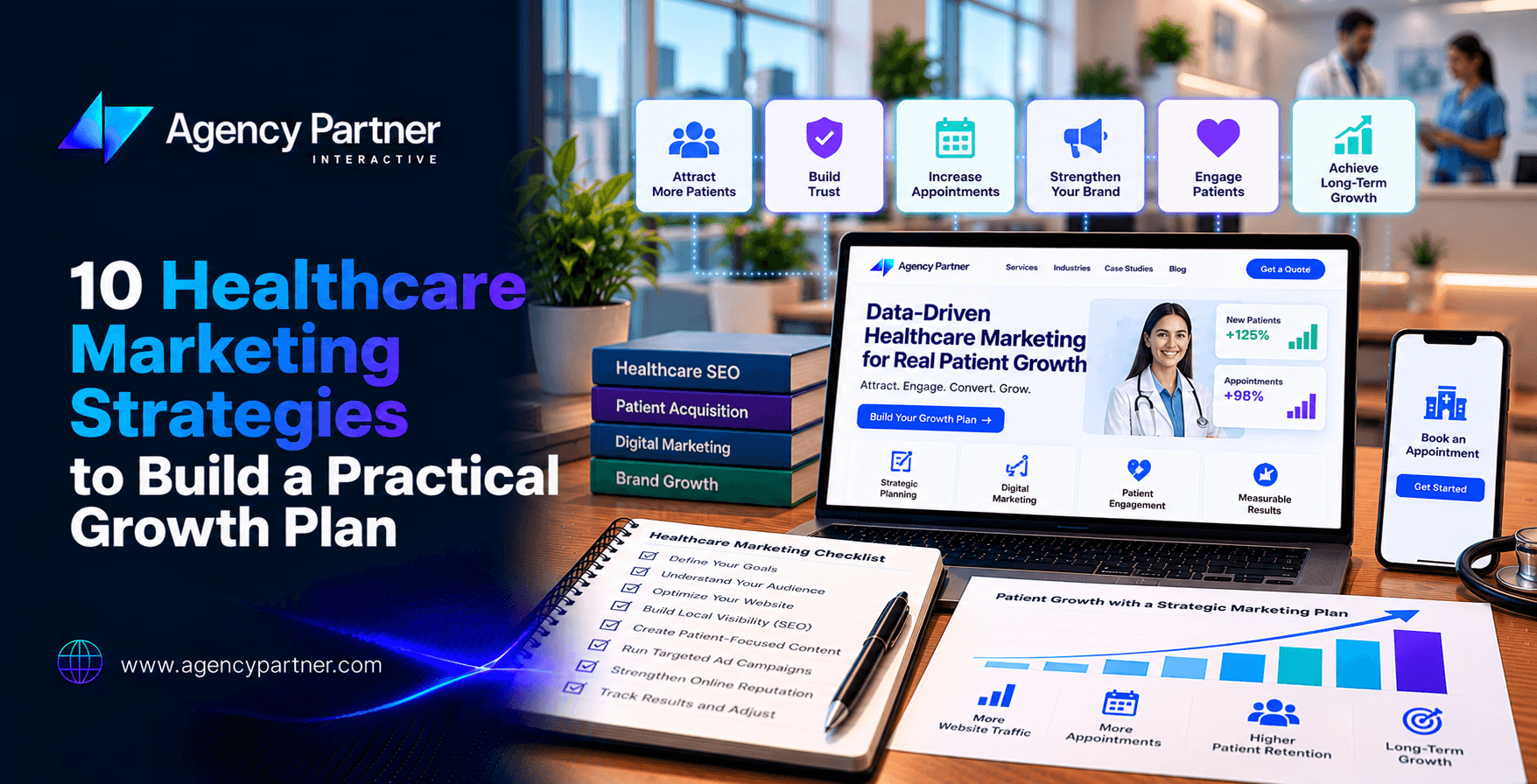
This guide explains ten practical strategies for clinics, provider groups and hospital teams. It focuses on choosing and operating a plan rather than treating every new technology as a requirement.
1. Choose a service priority before choosing a channel
Start with a service your organization can deliver reliably. Define the locations involved, appointment availability, referral requirements and the audience the service can appropriately help.
Speak with scheduling, operations and clinical representatives. Ask what prevents suitable enquiries from becoming completed appointments. Marketing may need to explain eligibility more clearly, while operations may need to improve response times or availability.
A clearly defined scope for healthcare digital marketing services should connect campaign decisions with these realities. Write down the desired outcome, its baseline, the responsible owner and the limits of the initial test.
2. Make service and location information easy to verify
A prospective patient should be able to confirm which service is offered, who provides it, where it is available and how to ask about an appointment. Keep provider profiles, phone numbers, opening hours and location details consistent.
For an eligible location, maintain its business listing and route visitors to a relevant page. Avoid copying identical city pages that do not explain meaningful differences in services, access or facilities.
Healthcare SEO services can help prioritize public service and location pages. Our local healthcare SEO guide provides additional context. Check accuracy with the people who manage each location rather than relying only on a marketing database.
Review: incorrect-location enquiries, outdated details and whether visitors can reach the appropriate scheduling route.
3. Build a website journey that supports appointment access
A booking button is useful only when the next step is understandable and works. Test the journey on a phone, including service selection, location choice, required information and confirmation.
Clearly distinguish an appointment request from a confirmed booking. Explain what happens next and provide an appropriate alternative when online scheduling is unavailable. Do not imply immediate availability if someone must review the request.
Medical website design services address the presentation of this information. UI/UX design services can help test the tasks, while healthcare website development services address implementation requirements.
If scheduling must connect to existing systems, assess the scope of custom healthcare software development services before promising a particular integration. Confirm permissions, failure handling and staff ownership.
4. Publish useful education with clinical review
Collect the practical questions people ask before contacting the organization. Explain services, appointment preparation, referral processes and what a visitor can expect. Use language suitable for the intended audience.
For medical explanations, assign an appropriately qualified reviewer and document the source and review date. Distinguish general education from individualized advice. Do not turn marketing copy into an automated diagnosis or promise a treatment result.
Choose the format around the question. A short video can introduce a provider; a written page may better explain practical requirements. Neither long articles nor video automatically outperform every other format.
Keep content ownership clear so that changes in services, clinicians or access arrangements lead to updates. Evaluate whether the information resolves recurring questions, not just whether the page attracts visits.
5. Test paid search against relevant demand and service capacity
Paid search can help an available service reach people looking for it. Begin with a defined service area, relevant search terms and a landing page that accurately describes the offer.
Check geographical coverage, appointment availability, unsuitable searches and the route for enquiries. A campaign should not keep promoting a service that the location cannot currently provide.
When evaluating healthcare PPC services, ask how the provider handles policy review and measurement. Google’s personalized advertising restrictions include health-related sensitive categories. Do not assume that ordinary retail audience or remarketing tactics are suitable for healthcare.
Review appropriate enquiries and resulting appointment outcomes within approved reporting arrangements. More form submissions do not necessarily mean more suitable patients or completed appointments.
6. Manage reviews without exposing patient information
Provide a consistent, appropriate route for genuine feedback. Avoid incentives or a process designed to invite only favorable reviews. Google’s review guidance prohibits offering incentives in exchange for reviews and emphasizes protecting private information in replies.
Healthcare responses need additional care. A public response should not confirm a treatment relationship or reveal appointment details. Use an approved response process and offer a private contact route when a concern requires investigation.
Do not argue about a person’s clinical history in a public thread. Assign responsibility for triage, privacy review and follow-up, and distinguish reputation management from resolving the underlying service issue.
7. Use social media to explain services and build familiarity
Focus on content that the organization can publish responsibly and consistently. Provider introductions, practical service explanations and general educational questions can help people understand the organization.
Do not include recognizable patients, appointment details or treatment stories merely because someone appeared in a public setting or commented online. Establish a documented approval process for any proposed patient-related content.
Healthcare social media marketing services should include moderation responsibilities and a clear route for sensitive messages. Public comments and direct messages should not be treated as a substitute for an approved clinical communication channel.
Review: useful audience questions, relevant service-page visits and the team’s ability to respond appropriately, alongside reach and engagement.
8. Separate care communications from promotional outreach
An appointment reminder, a general newsletter and a promotional offer are not automatically the same kind of communication. Review the purpose, information used, audience, vendor and channel before creating an automated sequence.
HHS explains that uses or disclosures of protected health information for marketing generally require written authorization, subject to limited exceptions. Its marketing guidance also distinguishes certain treatment and healthcare operations communications. A generic signup or segmentation label does not settle every requirement.
For healthcare email marketing services, have the appropriate privacy and compliance owners review the actual workflow. Manage preferences and access, and avoid assuming a platform purchase makes every campaign compliant.
These planning steps do not replace an organization-specific legal or privacy assessment.
9. Make telehealth and automation understandable
If virtual care is available, explain the service, appointment process, practical requirements and the appropriate contact route. Do not suggest that every location, patient or visit type qualifies.
Telehealth digital marketing services should reflect those boundaries. Telehealth website design services can help present the information and booking journey clearly.
For healthcare chatbot development services, define the permitted tasks and escalation route. A scheduling or FAQ assistant should not silently become a diagnostic tool. Review what information it receives, where it is stored and who can access it before launch.
For AI discovery more broadly, our SEO, AEO and GEO comparison explains the terminology and measurement distinctions. Clear information supports the reader; no format guarantees an AI recommendation.
10. Measure the complete access journey with an approved data plan
Agree on a small set of definitions before reporting results. A click, enquiry, appointment request, confirmed appointment and attended appointment are different stages.
| Measure | Question it helps answer | Important limitation |
|---|---|---|
| Relevant enquiries | Are campaigns reaching people asking about the available service? | Use agreed eligibility and reporting definitions. |
| Response and booking progress | Can the team help people reach the next step? | Operational capacity affects the result. |
| Completed appointments | Are recorded enquiries translating into actual access? | Keep reporting within approved systems and permissions. |
| Acquisition cost | What did the defined outcome cost? | Specify the included costs, attribution rules and time period. |
| Information and service issues | What is causing unsuitable enquiries or failed handoffs? | Summaries should not expose unnecessary patient details. |
Inventory forms, pixels, analytics tags, call tools and chat systems before expanding measurement. Review the information each tool receives, including URLs, form fields and appointment context.
HHS’s tracking technology guidance discusses PHI disclosures and notes a court order that vacated part of the guidance. Do not treat every public-page visit as automatically PHI, or assume that public-page tracking is automatically unrestricted. Assess the actual information and use with qualified reviewers.
Turn the strategies into a manageable plan
Choose one service line and a limited initial scope. Document appointment capacity, the patient questions to answer, the channels to test and the data arrangements approved for evaluation.
| Stage | Useful deliverable |
|---|---|
| Assess | A verified service and location inventory, journey review and baseline |
| Prepare | Approved content, working enquiry routes and reviewed measurement tools |
| Test | A limited campaign with owners, spending boundaries and review criteria |
| Improve | Changes based on enquiry quality, access outcomes and operational findings |
A new campaign may not require a full website rebuild. If a redesign is justified, our healthcare website redesign partner guide offers questions for evaluating the project and provider. Match the scope to the problem rather than increasing the number of channels at once.
Frequently asked questions
Which healthcare marketing strategy should a small practice start with?
Start with a service the practice can deliver, accurate public information and a reliable enquiry process. Choose the initial channel based on local demand, available capacity, budget and measurement constraints.
Is content marketing always better than paid advertising?
No. They solve different problems and operate on different timelines. Compare their role in the patient journey and the actual results rather than assuming one always wins.
How do hospital and clinic strategies differ?
Hospitals may need coordination across more locations, service lines and approval teams. A smaller clinic may have fewer resources but a narrower scope. Both need accurate information, operational alignment and appropriate handling of data.
Can healthcare marketing be automated safely?
Automation needs a defined purpose, appropriate information controls, review and escalation. Do not infer compliance from a vendor’s label or assume a workflow is suitable without evaluating its actual use.
How quickly should healthcare marketing produce growth?
Results depend on service capacity, starting visibility, channel choice and implementation. Set milestones for the work and review defined appointment outcomes rather than accepting a guaranteed percentage or deadline.
Build a plan the organization can deliver
Agency Partner Interactive helps healthcare teams connect website, content and marketing decisions with practical implementation. Bring your service priorities, access challenges and reporting requirements to a healthcare marketing planning discussion. Start with a clear scope and accountable owners before expanding the programme.