The best email marketing services depend on your business model, customer data, and marketing goals. B2B companies often need sales tracking and lead nurturing. Ecommerce stores need product data, purchase triggers, and customer retention tools.
Software subscriptions and agency services are different. A platform provides the tools, while an agency helps plan, build, and improve campaigns. Compare email marketing platforms based on CRM compatibility, automation, segmentation, support, and total costs before choosing.
Email marketing has changed since 2021. Businesses now have more tools for personalized campaigns, customer tracking, and automated follow-ups. But more features do not always mean better results. A B2B company managing long sales cycles has different needs from an online store sending abandoned-cart reminders.
Choosing the wrong platform can create extra work, disconnected data, and rising costs. This guide compares leading providers, explains the difference between software and agency support, and helps you choose the right solution.
Email Marketing Software vs. Agency Services: What’s the Difference?
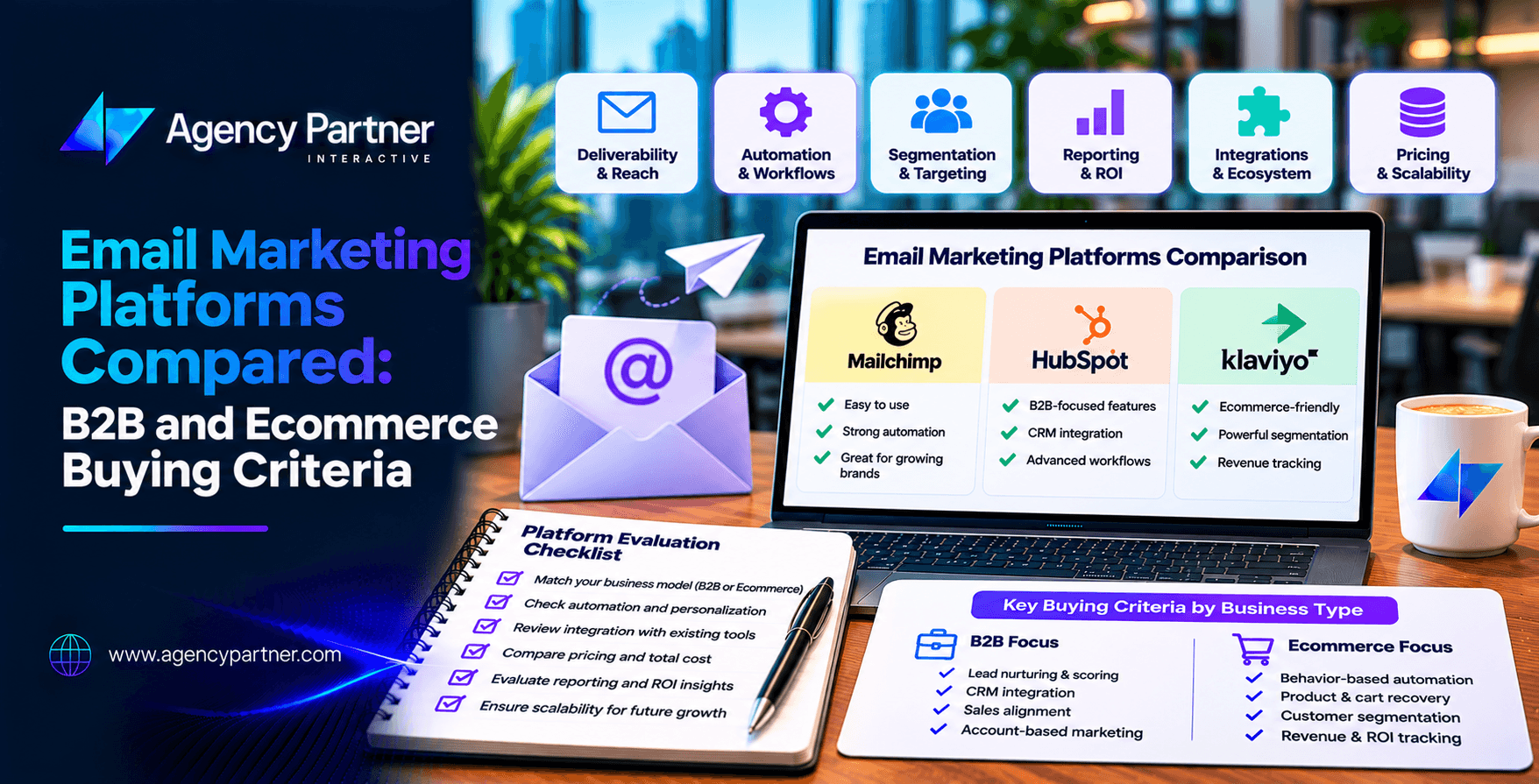
An email marketing platform is software that stores contacts, sends campaigns, and tracks results. Popular tools include Mailchimp, HubSpot, Klaviyo, Brevo, ActiveCampaign, and Constant Contact. These platforms provide the technology, but someone still needs to manage the work.
An agency can help with audience strategy, campaign design, copywriting, testing, reporting, and ongoing improvements. For example, a business may pay Mailchimp for its software while hiring an agency to manage newsletters and customer journeys.
B2B email marketing services often include lead nurturing, sales alignment, and lifecycle campaigns. Ecommerce services may focus on abandoned carts, product recommendations, and repeat purchases. The right choice depends on your team’s skills, available time, and campaign goals.
Which Email Marketing Platforms Are Best in 2026?
No single platform is the best choice for every business. The following comparison uses official provider information available in November 2026.
| Platform | Best fit | Key strengths | Published starting price |
| Mailchimp | Small businesses | Campaigns, templates, basic automation | Essentials: $13/month |
| HubSpot | B2B sales teams | Built-in CRM, lead tracking, advanced workflows | Starter: $20/month per seat before promotions |
| Klaviyo | Ecommerce brands | Purchase data, customer segments, automated flows | Free tier available |
| Brevo | Budget-focused teams | Email, SMS, contact management | Starter: $9/month |
| ActiveCampaign | Automation-focused businesses | Advanced workflows and integrations | Quote or plan selection required |
| Constant Contact | Small business campaigns | Templates, support, simple campaigns | Lite: $12/month |
Prices are starting points in USD, not equivalent packages. Contact limits, billing terms, features, and add-ons vary. Confirm current quotes before purchasing.
Mailchimp: A Practical Starting Point
Mailchimp suits businesses that need newsletters, templates, and basic audience management. Its Essentials plan starts at $13 per month, while Standard starts at $20 per month for the base contact tier. Costs rise with contact counts and plan requirements. Mailchimp may work well for smaller teams, but businesses should confirm whether their required automations and integrations are included.
HubSpot: Strong for B2B Sales Alignment
HubSpot combines marketing tools with a CRM. This makes it useful for businesses that track leads through several sales stages. Teams can connect marketing activity with contact records and sales processes.
However, advanced features come at a higher price. Marketing Hub Professional lists a regular starting price of $890 per month, with required onboarding fees.
Klaviyo: Built Around Ecommerce Data
Klaviyo focuses on customer behavior and purchase history. It supports product-based segments, automated flows, and ecommerce integrations. Its free email plan includes up to 250 active profiles and 500 monthly sends. Paid costs depend on active profiles and sending capacity.
Brevo, ActiveCampaign, and Constant Contact
Brevo offers a lower-cost entry point, with Starter plans beginning at $9 per month. Higher plans provide more automation and reporting features. ActiveCampaign focuses on advanced workflows and customer journeys. Its current pricing page allows businesses to select their contact needs or request tailored pricing.
Constant Contact offers straightforward campaign tools and support. Its Lite plan starts at $12 per month, while Standard begins at $35 per month. These options serve different needs, so compare the features included in each plan rather than starting prices alone.
What Should B2B Companies Look for in an Email Platform?
B2B buying decisions often involve several people and a longer sales process. A lead may download a guide, attend a webinar, request a demo, and speak with sales before becoming a customer. Your platform should help track that journey.
Strong B2B email marketing services connect email activity with contact records, company details, and sales stages. For example, a prospect who requests pricing may need a different follow-up from someone who subscribed to a newsletter.
Look for tools that support lead scoring, lifecycle stages, account-based segments, and sales alerts. HubSpot and ActiveCampaign are worth evaluating when these workflows matter. The final decision should depend on your existing CRM and the data your team needs.
What Should Ecommerce Businesses Look for?
Ecommerce email programs rely heavily on shopping behavior. A customer who abandons a cart needs a different message from someone who made three purchases last month. The platform should connect with your store and use reliable product, order, and customer data.
Look for abandoned-cart flows, post-purchase messages, product recommendations, and customer segments. Klaviyo is a strong candidate for these needs, while Mailchimp and other providers may also fit depending on the store platform.
Effective email automation helps businesses respond to customer actions without creating every message manually. However, automated campaigns still need accurate data, relevant content, and regular testing.
Why Does CRM Integration Matter?
CRM integration connects email activity with the customer information your business already uses. Without it, marketing and sales teams may work with different records. For example, a salesperson might contact a lead who has already requested a demo or opted out of marketing emails.
A reliable connection helps reduce these mistakes. Before choosing software, confirm which fields sync, how often updates occur, and which system controls each record.
CRM Integration Checklist
- Does the platform connect directly with your current CRM?
- Can it sync contact details, lifecycle stages, and relevant custom fields?
- Are updates one-way or two-way?
- Can it prevent duplicate records?
- Does it respect unsubscribe preferences?
- Can sales teams see useful email activity?
- Will additional connectors or development work cost extra?
A successful CRM integration should support your workflow rather than force your team to manage duplicate data.
How Important Are Automation and Segmentation?
Segmentation determines who receives a message. Automation determines when it gets sent. Both affect campaign relevance. A B2B company might group contacts by industry, company size, or sales stage.
An ecommerce store might use purchase history, product interest, or customer value. Good email automation allows these groups to receive different messages based on their actions. For example, a new subscriber may receive a welcome series, while an existing customer receives product updates.
Advanced workflows can also pause messages when a lead becomes a customer. Before purchasing, test whether the platform supports the rules you need. Some lower-cost plans limit workflow steps, audience segments, or advanced reporting.
What Makes Email Marketing Costs Increase?
The advertised monthly price rarely tells the full story. Most email marketing platforms charge based on contact counts, sending volume, plan level, or a combination of these factors. For example, Mailchimp’s pricing changes with contact tiers and included sends.
Klaviyo charges based on active profiles and email capacity. HubSpot uses marketing contact tiers and may charge for additional seats, onboarding, and higher-level features. Other costs may include SMS credits, integration tools, template design, data migration, and technical setup.
Agency management is usually a separate expense. When comparing email marketing services, calculate the expected annual cost rather than choosing the lowest monthly price. Include software, setup, campaign production, reporting, and ongoing management.
How Do You Evaluate Support and Deliverability?
Support becomes important when a campaign fails or customer data stops syncing. Check whether the plan includes email, chat, phone, or dedicated account support. Also review response times and technical documentation.
Deliverability matters just as much. Your provider should support sender authentication, unsubscribe handling, suppression lists, and reporting. However, no platform can guarantee inbox placement.
Your list quality, sending practices, and domain reputation also affect results. Ask providers how they help businesses monitor delivery problems and protect sender reputation.
Do You Need Software or an Agency?
A small business with a simple newsletter may only need software and someone to manage it internally. A growing company with complex campaigns may benefit from professional support. An agency can help build segments, plan campaigns, set up workflows, and review performance.
This is especially useful when your team lacks the time or experience to manage advanced features. Professional B2B email marketing services can also help align marketing messages with sales goals. For ecommerce brands, agency support may focus on customer retention and revenue from automated flows.
The decision is not always software versus agency. Many businesses need both.
How Agency Partner Interactive Can Help
Choosing software is only one part of building an effective email program. Agency Partner Interactive provides email marketing services for businesses that need campaign strategy, audience segmentation, automated journeys, and performance reporting.
The team supports both lead nurturing and ecommerce campaigns. Whether you’re choosing a new platform or improving an existing setup, the goal is to make each email more relevant and useful.
Share your CRM, audience size, and email goals with Agency Partner Interactive. The team can discuss your current challenges and the support your business needs.
Final Thoughts
The best platform is the one that fits your business, data, and team. B2B companies should prioritize sales alignment and lead tracking. Ecommerce brands should focus on shopping behavior and customer retention.
Compare integrations, automation, segmentation, support, and total costs before making a decision. The right combination of software and expertise can help turn email into a more effective growth channel.
Frequently Asked Questions
1. Do I need email marketing software or an agency?
You need software to manage contacts and send campaigns. An agency is optional but can help with strategy, design, automation, and reporting. Businesses with limited internal resources may benefit from using both.
2. Which email marketing platform is best for B2B businesses?
HubSpot and ActiveCampaign are strong options for B2B teams that need lead nurturing and sales workflows. The best choice depends on your existing CRM, required integrations, budget, and reporting needs.
3. Which CRM integrations matter most for email marketing?
The most important integrations connect contact records, sales stages, customer activity, and unsubscribe preferences. Your platform should also support accurate data updates and prevent duplicate records that could affect campaign targeting.
4. What makes email marketing platform costs increase?
Costs often rise as contact lists grow, sending volume increases, or businesses need advanced features. Extra users, SMS, onboarding, integrations, and agency management can also increase the total monthly or annual expense.
5. Is email automation worth paying extra for?
It can be valuable when your business needs timely follow-ups based on customer actions. Welcome emails, lead nurturing, and abandoned-cart reminders are common examples. The value depends on accurate data and effective workflows.
6. How should ecommerce businesses compare email marketing platforms?
Compare store integrations, purchase-based segmentation, automated flows, reporting, and pricing as your customer list grows. Test whether the platform can use product and order data accurately before committing to a paid plan.