You have a software idea and a budget. Your team is ready to hire developers and start building. But can you explain exactly what the software must do? What happens when users enter incorrect information? Which systems must connect? Who approves each feature?
If these questions remain unanswered, development can quickly become expensive. The software development discovery phase helps businesses resolve these questions before writing code. It turns an idea into a practical development plan with clear features, costs, risks, and timelines.
This guide explains what happens during discovery, which documents you should receive, and how to know whether your project is ready for development.
What Is the Software Development Discovery Phase?
The software development discovery phase is the planning stage before software design and development move into full production. During discovery, business owners, stakeholders, designers, and technical experts work together to define the proposed application. The goal is to understand the business problem and identify a practical solution.
Discovery usually includes:
- Stakeholder interviews
- Business process reviews
- User research
- Feature planning
- Technical analysis
- Budget and timeline estimates
- Risk assessment
The result should be a set of documents your team can review and approve. According to ScienceSoft’s discovery guidance, planning may take about three weeks for smaller projects and several months for complex systems. The scope determines the timeline.
Business Takeaway: Discovery helps you make informed decisions before committing to a full development budget.
Why Is Discovery Important Before Software Development?
Software projects often face problems when teams start with unclear expectations. A business owner may request a customer portal without defining user permissions. A developer may build a reporting feature without knowing which data sources it needs.
These gaps can lead to delays and rework. A structured discovery process helps prevent them.
What Problems Does Discovery Solve?
- Unclear Scope: Teams agree on which features belong in the first release.
- Budget Uncertainty: Developers can estimate work based on defined requirements.
- Technical Risks: Experts identify integration and security concerns early.
- Conflicting Expectations: Stakeholders review the same documents before development.
- Poor User Experience: Wireframes reveal confusing workflows before they become expensive to change.
The most valuable software discovery deliverables give everyone a shared understanding of the project. They also provide a basis for comparing development proposals.
What Deliverables Should You Expect From Discovery?
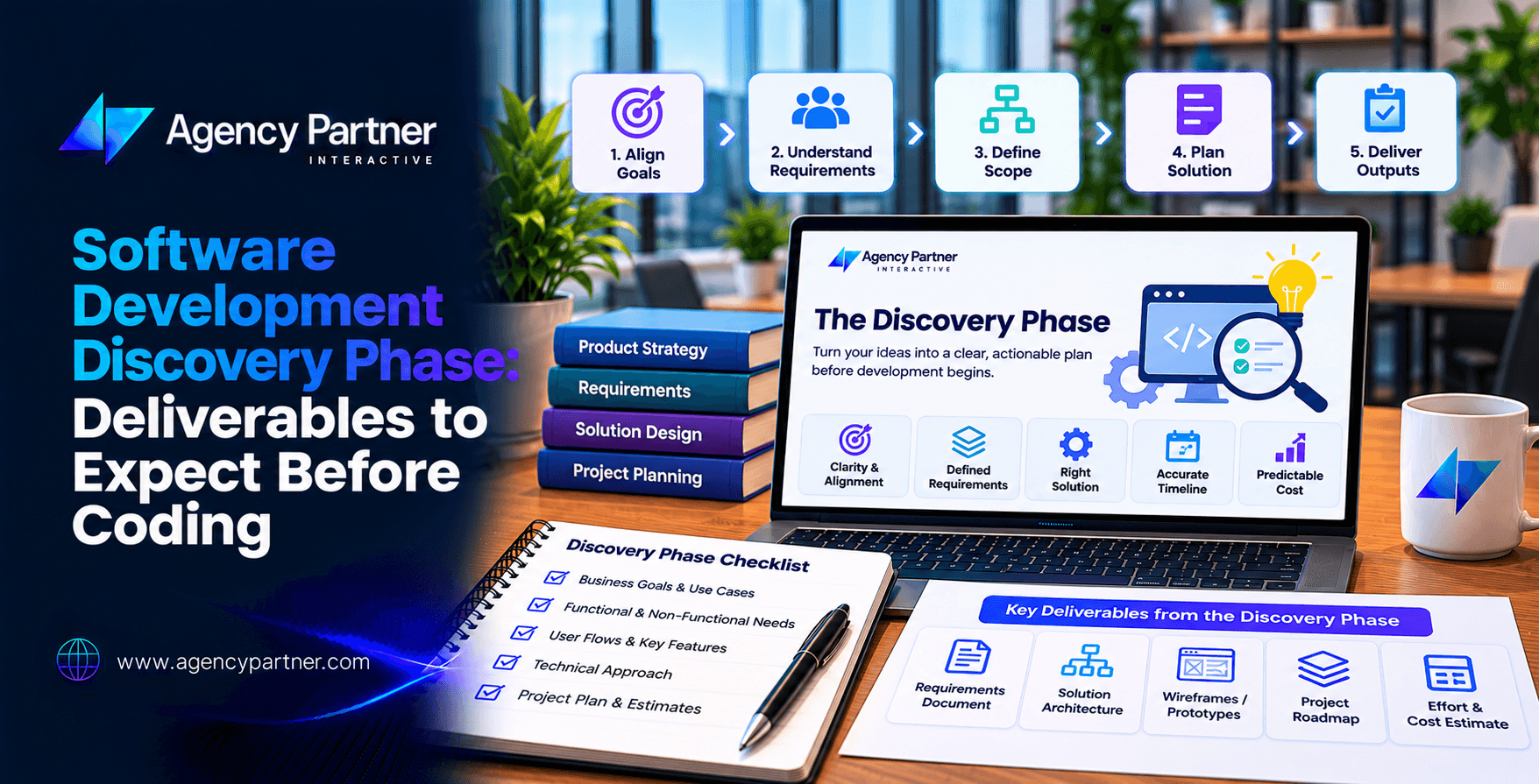
A completed discovery phase should produce more than meeting notes. The exact documents depend on project size, but most businesses should expect the following seven deliverables.
1. Project Vision and Scope Document
The scope document explains why the software is being built. It should identify the business problem, target users, project goals, and expected outcomes.
It also defines what the first release will include. For example, a logistics company may need software to track deliveries and reduce manual updates. Its first release might include order tracking, driver assignments, and status reports. Advanced route optimization could be scheduled for a later phase.
What to check: Does the document clearly explain what is included and excluded?
2. Functional and Nonfunctional Requirements
Detailed project requirements describe what the software must do. Functional requirements cover features and user actions. Examples include account creation, order approval, report generation, and payment processing.
Nonfunctional requirements describe how the system should perform. These may cover security, speed, accessibility, reliability, and capacity.
For example:
- Functional Requirement: Managers can approve purchase requests.
- Nonfunctional Requirement: Only authorized managers can access the approval screen.
Both are needed to build reliable software.
3. User Stories and Feature Backlog
A feature backlog organizes development tasks by priority. Teams often use user stories to explain features from the user’s point of view.
For example:
“As a warehouse manager, I want to see delayed orders so I can respond before delivery deadlines.”
Each story should explain a real need. The backlog should also identify which features are essential for launch. This helps businesses avoid paying for features users may not need.
A prioritized backlog is one of the most useful software discovery deliverables because it connects business goals with development work.
4. Wireframes and User Flow Diagrams
Wireframes show the basic layout of important screens. They help stakeholders understand where information, buttons, and forms will appear. User flow diagrams show how people move through the application.
For example, a customer portal might include this journey:
Login → Dashboard → Select Service → Submit Request → Confirmation
These visuals help teams find missing steps before development begins. Wireframes do not need final colors or branding. Their purpose is to test structure and usability.
5. Technical Architecture and Integration Plan
The technical plan explains how the application will work behind the scenes. It may identify the technology stack, hosting environment, database, and key integrations.
For example, a new platform may need to connect with an existing CRM, accounting system, and payment provider. The discovery team should assess whether those systems offer suitable APIs.
Security and data handling requirements should also be documented. Complex projects may need a proof of concept to test a difficult technical feature.
What to Check: Does the plan identify major dependencies and technical risks?
6. Software Acceptance Criteria
Clear software acceptance criteria define the conditions a feature must meet before it can be approved. They turn broad requests into testable results. Consider a login feature.
A vague requirement says:
“Users should be able to log in securely.”
Better acceptance criteria explain that:
- Registered users can log in with valid credentials.
- Incorrect credentials trigger a clear error message.
- Passwords are not displayed on screen.
- Users can reset forgotten passwords.
- Access follows the approved security rules.
These conditions help developers and testers agree on expected behavior. Atlassian explains that acceptance criteria describe when a user story meets its intended requirements. They differ from a general definition of done, which applies broader quality rules across development work.
7. Development Roadmap and Cost Estimate
The final roadmap outlines how the project will move forward. It should include major milestones, planned releases, team responsibilities, and estimated timelines. A cost estimate should explain its assumptions.
For example, a proposal may estimate development based on five user roles, three integrations, and a defined feature list. If those requirements change, the estimate may also change.
A useful roadmap also identifies risks and decisions that must be resolved before coding. This is where the software development discovery phase becomes a practical investment plan.
What Does a Complete Discovery Deliverables Checklist Include?
Before approving development, review the documents you received.
| Deliverable | What it should answer |
| Vision and scope | Why are we building this? |
| Requirements document | What must the software do? |
| Feature backlog | What should be built first? |
| Wireframes | How will users complete tasks? |
| Technical plan | How will the system work? |
| Acceptance criteria | How will features be approved? |
| Roadmap and estimate | What will development require? |
For complex projects, additional documents may include a data migration plan, security assessment, or compliance review. The right project requirements should be detailed enough to guide development without making every future decision impossible to change.
How Long Does the Software Discovery Phase Take?
Discovery timelines depend on complexity and stakeholder availability. A focused application may need two to four weeks. A mid-sized business platform may require four to six weeks. Large enterprise systems can take two months or longer. These are planning estimates, not fixed industry standards.
What Can Extend the Timeline?
Several factors affect discovery:
- Multiple departments with different needs
- Complex third-party integrations
- Legacy software with limited documentation
- Regulatory requirements
- Unclear business processes
- Delayed stakeholder feedback
The fastest discovery process is not always the best. The goal is to resolve important questions before development begins.
How Much Does Software Discovery Cost?
Discovery may be included in a larger development agreement or priced as a separate service. Its cost depends on the team, project complexity, and work required. A small project may need a business analyst and technical lead.
A complex platform may also require UX designers, architects, and security specialists. Rather than relying on a generic price, ask for a clear discovery proposal. It should explain the activities, expected documents, timeline, and fees. Also confirm whether the discovery cost is credited toward later development.
Important: Discovery should reduce uncertainty, but it cannot guarantee that every future cost or risk will disappear.
How Do You Know When Discovery Is Complete?
Discovery is complete when your team has enough approved information to make a sound development decision.
Before signing off, confirm that:
- Business goals are clear.
- Core features have priorities.
- Key workflows are documented.
- Major integrations have been reviewed.
- Technical risks are identified.
- The budget has stated assumptions.
- Important features have testable acceptance criteria.
- Stakeholders agree on the next steps.
A project does not need every future feature defined in detail. However, the first development phase should have clear software acceptance criteria and a realistic scope. If major questions remain unanswered, resolve them before committing to the build.
What Happens After the Discovery Phase?
Once stakeholders approve the plan, the project can move into detailed design and development. Teams may refine wireframes, create visual designs, and prepare the first development tasks.
Developers then build features based on the agreed priorities. Testing takes place throughout development. The approved software discovery deliverables become reference points for scope, decisions, and quality checks.
Changes can still happen. However, a documented process helps teams understand how those changes affect costs and timelines.
How Agency Partner Interactive Supports Software Discovery
A successful software project starts with a clear understanding of the business problem. Agency Partner Interactive helps businesses define goals, assess requirements, and plan custom applications before development begins.
Through its custom software development services, Agency Partner Interactive supports project planning, design, development, and technical integrations. The team works with businesses to understand workflows, identify priorities, and build solutions around their needs.
Whether you are replacing an outdated system or launching a new platform, a structured discovery process can help clarify the next steps.
Have a software idea but need a clear plan? Discuss your project requirements with Agency Partner Interactive.
Final Thoughts: Know What You’re Building Before You Start
The software development discovery phase helps turn a business idea into a practical development plan. It defines the scope, users, features, technical needs, and expected costs.
The most important deliverables include clear requirements, wireframes, a prioritized backlog, technical documentation, and acceptance criteria. Before approving development, make sure your team understands what will be built and how success will be measured. Agency Partner Interactive helps businesses plan and develop software that supports real business goals.
Ready to plan your next software project? Connect with Agency Partner Interactive to discuss your requirements.
Frequently Asked Questions
-
What is included in a software development discovery phase?
Discovery usually includes stakeholder interviews, business analysis, feature planning, user flows, technical reviews, and cost estimates. The final documents should define the project scope, priorities, risks, and development roadmap before coding begins.
-
What are the main software discovery deliverables?
The main deliverables include a vision and scope document, requirements list, feature backlog, wireframes, technical architecture plan, acceptance criteria, and development roadmap. Complex projects may also require security reviews or proof-of-concept testing.
-
How long does a software discovery phase take?
A small project may take two to four weeks, while a mid-sized platform may need four to six weeks. Complex enterprise projects can require several months. The timeline depends on integrations, stakeholders, and technical risks.
-
What is the difference between project requirements and acceptance criteria?
Project requirements explain what the software must do and how it should perform. Acceptance criteria define the specific conditions a feature must meet before approval. Both help developers, testers, and business stakeholders understand the expected results.
-
Can software development begin without a discovery phase?
Yes, especially when requirements are already clear and well documented. However, skipping discovery without a reliable plan increases the risk of misunderstandings, scope changes, and rework. Even small projects benefit from confirming key requirements before coding.
-
Who should participate in the software discovery phase?
The process usually involves business owners, project managers, business analysts, and technical experts. Designers, developers, security specialists, and end users may also participate. The right team depends on the project’s size, goals, and technical needs.