Key Takeaways:
- Email delivers an average $36–$42 return for every $1 spent, the highest ROI of any digital channel
- 4.7–4.8 billion global email users by end of 2026, with 392 billion emails sent daily.
- Automated emails generate 30% of all revenue from just 2% of total sends.
- 86.4% of marketers now use AI tools, with email being the top channel for AI-driven performance gains.
Email keeps getting pronounced dead. In 2026, it’s the highest-ROI channel in digital marketing, and it’s changing faster than ever. The problem? Most businesses are still running a 2021 playbook. Generic newsletters, static templates, and batch-and-blast sends are rapidly losing ground as inboxes get smarter and subscribers get harder to impress.
Here are the 10 email marketing trends that actually matter in 2026, backed by real data.
1. Is AI Personalization Now the Baseline for Email Marketing Campaigns?
Yes, and anything less is falling behind. The latest email marketing trends show AI moving from an experiment to a core execution tool. AI-generated subject lines outperform human-written ones by 26% in open rates, and when paired with send-time optimization, that edge grows by another 14%.
Real personalization in 2026 goes beyond a first name. It means adjusting layouts, subject lines, product recommendations, and send times for each individual, automatically. 86.4% of marketers already use AI tools, and email is where the performance gains are most measurable. For any email marketing agency still offering “segmented blasts” as a personalization strategy, the gap is widening fast.
2. What Are the Newsletter Trends Brands Are Actually Investing In?
Newsletters are having a serious moment, and it’s strategic, not nostalgic. With social algorithms becoming unpredictable and third-party cookies fading, brands are doubling down on owned channels. 81% of B2B marketers use email newsletters as their primary content marketing channel.
The newsletter trends worth watching: value-led content over promotional blasts, founder or expert-led voices that cut through AI-generated noise, and behavioral segmentation so subscribers receive content based on what they’ve engaged with, not just what you scheduled. For b2b email marketing, newsletters are the long-game channel that keeps your brand in consideration across a slow sales cycle.
3. How Are B2B Email Marketing Trends Different in 2026?
B2b email marketing runs on different rules than B2C, and mixing them up is costly. The core email marketing trends and best practices for B2B in 2026:
- Journey-stage content: Top-of-funnel gets education. Mid-funnel gets validation. Bottom-of-funnel gets business case support. Mixing these reduces conversions.
- Preheader as a second subject line: With AI-powered inboxes now summarizing emails before they’re opened, the first 90–140 characters of preview text matter as much as the subject line itself.
- Cross-channel coordination: The strongest b2b email marketing runs alongside LinkedIn content, paid retargeting, and sales outreach, creating a compounding effect across touchpoints.
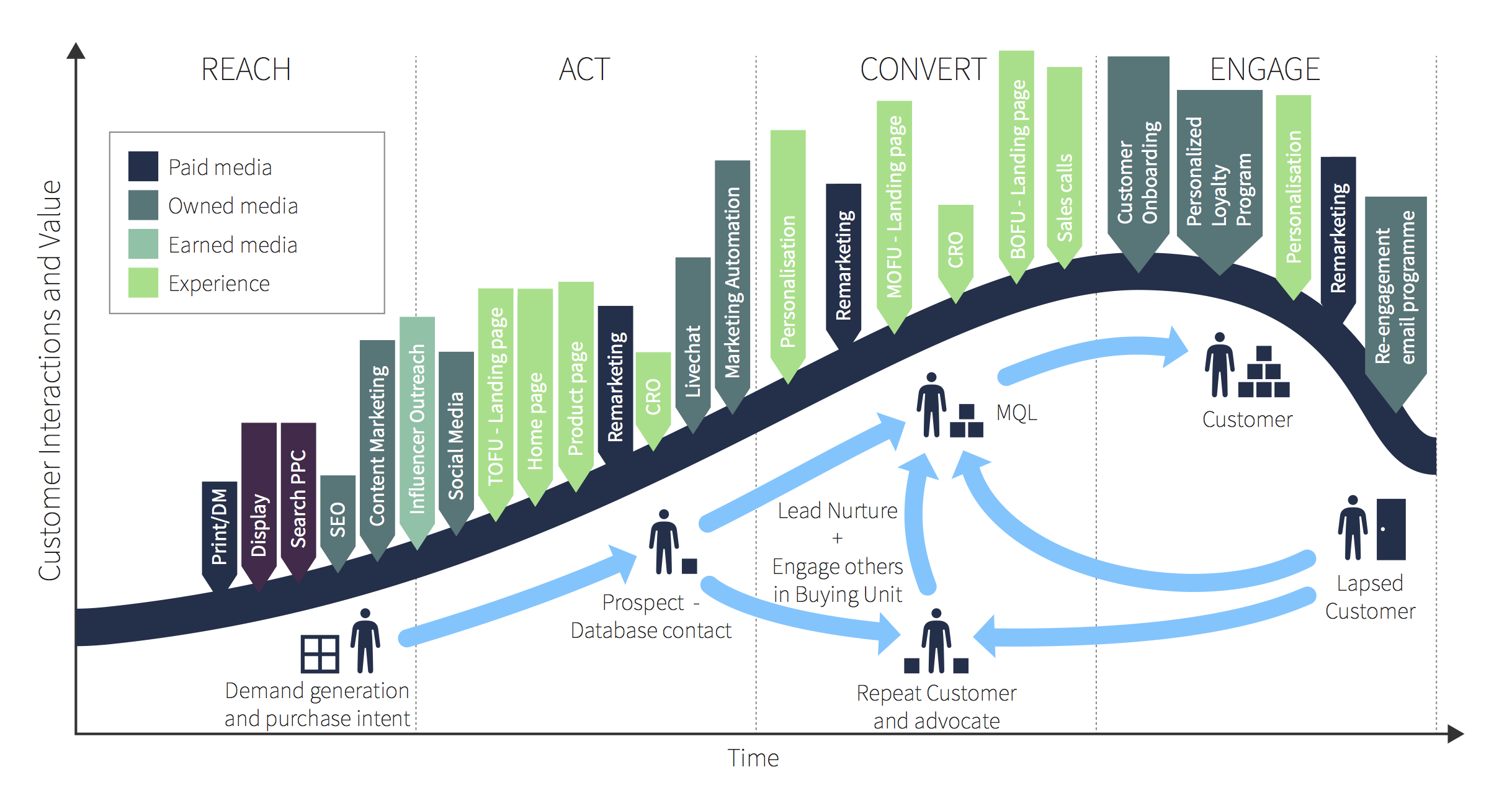 71% of B2B marketers say email is one of their most effective channels. Working with email marketing agencies that understand this nuance is the difference between nurture and noise.
4. What Is the Future of Email Marketing When It Comes to Automation?
Automation is where the real money is. Automated emails generate 30% of all email revenue from just 2% of total sends, earning 16x more per send than standard campaigns. That gap is only growing.
The future of email marketing is behavioral trigger flows, not scheduled calendars. The high-performing automations every business needs in 2026:
- Welcome sequences (open rates often exceed 50%)
- Abandoned cart recovery (AI-optimized flows improve recovery by 3.6 percentage points in 12 weeks)
- Post-purchase and loyalty onboarding flows
- Re-engagement sequences with engagement-based suppression to protect deliverability
For ecommerce email marketing, one mid-size brand saw automation grow to 43% of total email revenue in just 12 weeks. That’s not optimization, that’s infrastructure.
5. Are Interactive Emails Now a Standard Email Marketing Best Practice?
They’re becoming one fast. In 2025, 97% of marketers already used at least one interactive element in their campaigns. In 2026, static emails in competitive inboxes feel like billboards on a highway, visible but ignorable.
Interactive email marketing campaigns include embedded polls, product carousels, quizzes, and gamification elements like scratch cards. Beyond engagement, these elements serve a strategic purpose: they collect zero-party data, information subscribers willingly share, which powers personalization without cookies or hidden tracking. For businesses following email marketing best practices, interactive elements are now a data collection strategy as much as a design choice.
6. How Is Email Marketing for Outlook and Gmail Changing?
Inbox providers are no longer passive. They are AI-powered gatekeepers deciding what gets seen, summarized, or blocked, and the rules changed significantly in 2025.
Email marketing for outlook users hit a real crisis: Outlook and Office 365 saw inbox placement fall below 30% for some senders due to aggressive bulk-sender enforcement. Gmail is filtering at the individual level, meaning disengaged subscribers in your list can damage deliverability for your most active ones.
The fix is foundational: SPF, DKIM, DMARC, and BIMI authentication must be correctly configured before any creative or strategy work matters. Europe leads globally with 89.1% inbox placement, largely because GDPR forced better list hygiene. North American brands have a clear model to follow.
7. What Email Marketing Trends Are Driving E-Commerce Revenue?
Ecommerce email marketing has the clearest revenue data of any vertical. The trends moving the needle:
- Segmentation: Marketers report up to a 760% increase in revenue from segmented campaigns vs. generic sends.
- AI product recommendations: Dynamic content blocks lift median order value by approximately 20%.
- Post-purchase flows: The period right after a purchase is the highest-engagement window in any customer relationship, and most brands waste it
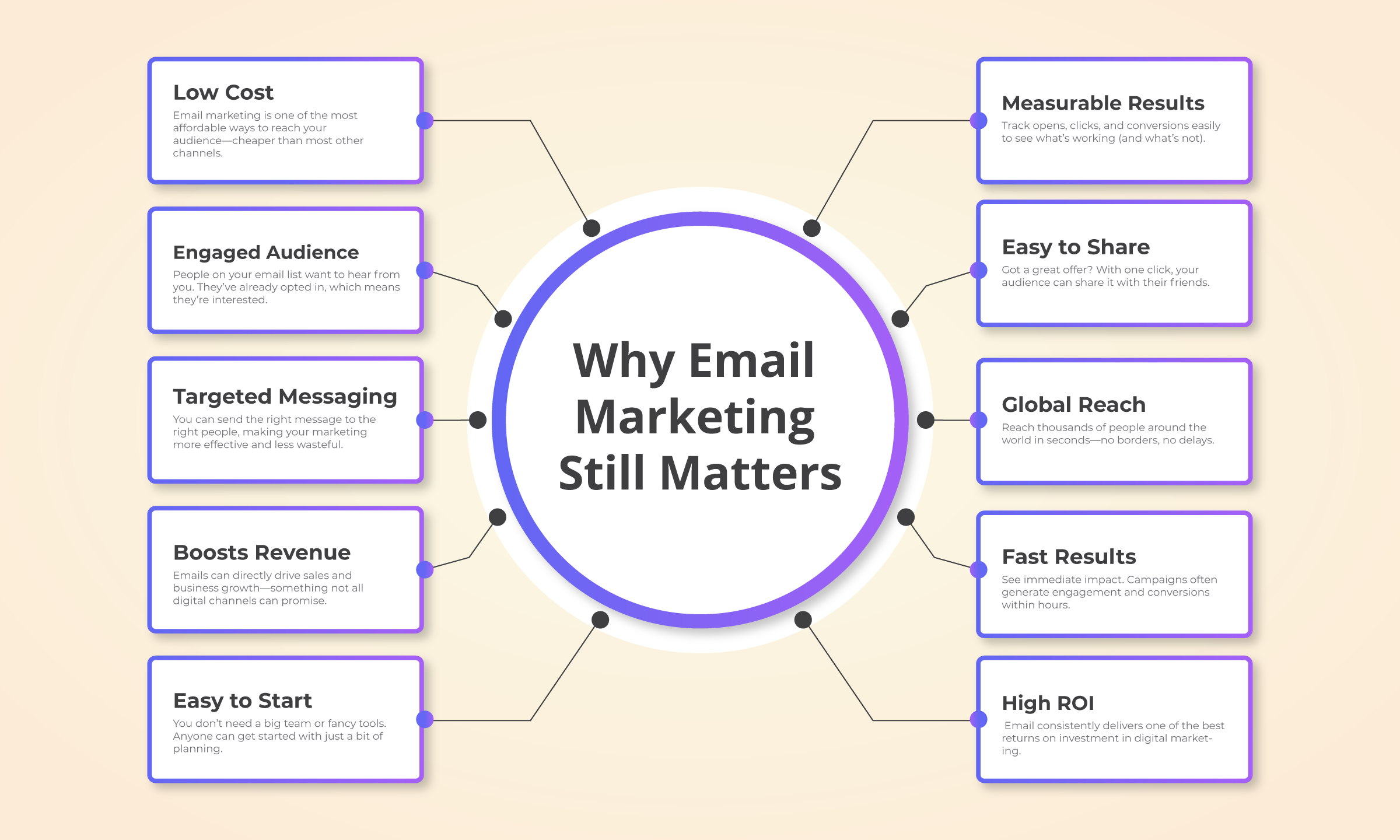 For businesses working with email marketing agencies on e-commerce, audit automation infrastructure first. The biggest revenue gains come from behavioral flows, not better subject lines.
8. Is the Plain-Text Email Revival a Real Trend?
It’s one of the most data-backed trends in email marketing right now, and it surprises almost everyone. HubSpot analyzed over 500 million marketing emails and found:
- HTML templates reduced open rates by 25%
- GIFs cut open rates by 37%
- Plain-text emails got 42% more clicks than GIF versions and 51% more than full HTML templates
The reason: HTML complexity triggers spam filters, slows mobile load times, and signals “mass marketing” to both algorithms and human readers. A clean, well-written plain-text email reads like a message from a person, and gets treated like one. For b2b email marketing especially, plain-text outreach sequences are now outperforming polished templates.
9. How Are Privacy Regulations Reshaping Email Marketing Best Practices?
Privacy compliance isn’t just legal protection anymore, it’s a competitive advantage. Brands building on trust-first data practices are seeing measurably stronger engagement than those still relying on aggressive tracking or opaque data usage.
The email marketing best practices every sender needs in 2026:
- SPF, DKIM, and DMARC correctly configured
- Double opt-in or documented consent for every subscriber
- One-click unsubscribe in every email (now enforced by Gmail and Yahoo)
- GDPR and CCPA-compliant privacy notices
Beyond compliance, brands using zero-party data, collected through quizzes, polls, and preference centers, are seeing 35–60% higher engagement rates than those relying on inferred behavior. When subscribers know what they’re sharing and why, personalization feels helpful, not invasive.
10. What Is the Future of Email Marketing as Part of Omnichannel Strategy?
The final and most strategic of the email marketing trends in 2026: email is evolving from a standalone channel into the connective backbone of the entire customer journey.
The best email marketing campaigns now run in coordination with SMS, push notifications, LinkedIn, and paid retargeting, all sharing unified customer data. A cart abandonment response isn’t just one email anymore. It’s an in-app nudge first, a push notification at two hours, then an email at 24 hours with social proof. This sequenced approach doubles cart recovery rates compared to email-only.
What is the future of email marketing? It’s email becoming the most data-rich, permission-based layer in a fully connected customer journey. Businesses building that infrastructure now will compound the advantage over the next three to five years.
Why These Email Marketing Trends Matter Right Now?
The trends in email marketing for 2026 all point the same way: fewer, smarter, more relevant emails, built on behavioral data, powered by AI, and delivered as part of a coordinated experience.
The channel still delivers $36–$42 for every $1 spent. The global email market is growing at 10.82% annually through 2031. The opportunity is there. The question is whether your strategy matches where the channel actually is in 2026, or where it was in 2021.
Frequently Asked Questions
1. What are the top email marketing trends in 2026?
AI personalization, behavioral automation, interactive emails, plain-text revival, privacy-first data, and omnichannel orchestration are the six trends with the strongest performance data behind them.
2. What is the future of email marketing with AI?
AI is compressing production timelines from two weeks to three days, automating segmentation, personalizing content at scale, and optimizing send times per individual. By 2030, AI adoption in email is projected to reach 97%.
3. How do email marketing trends differ for e-commerce vs. B2B?
E-commerce email focuses on behavioral automation, product recommendations, and cart recovery. B2B email focuses on journey-stage content, long-cycle nurture, and cross-channel coordination with sales outreach.
References
- Verified.email — Trends and Benchmarks Forecast 2026–2030 — verified.email/blog/email-marketing/trends-and-benchmarks-forecast-2026-2030 (Outlook inbox placement below 30%; Europe 89.1% placement)
- Claritysoft — CRM Email Marketing Trends 2026 — claritysoft.com/crm-email-marketing-trends-2026 (Zero-party data; 35–60% higher engagement)
- Campaign Monitor / AI-bees — Top Email Marketing Trends 2026 — ai-bees.io/post/email-marketing-trends (760% revenue lift from segmentation; 81% B2B newsletter reliance)
- Noseberry — B2B Email Marketing Best Practices 2026 — noseberry.com/blogs/digital-marketing/email-marketing-best-practices-in-2026 (Journey-stage personalization; preheader as second subject line)
- Involve.me — Marketing Personalization Statistics 2026 — involve.me/blog/marketing-personalization-statistics (43% email revenue from automation in 12 weeks; cart recovery doubles with omnichannel)
- Knak — 2026 Email Marketing Trends — knak.com/blog/2026-email-marketing-trends (71% B2B email newsletter usage; 37% most effective channel)
Ready to build an email strategy that converts in 2026? Agency Partner Interactive helps businesses design, automate, and scale email programs that deliver real ROI. Let’s talk.