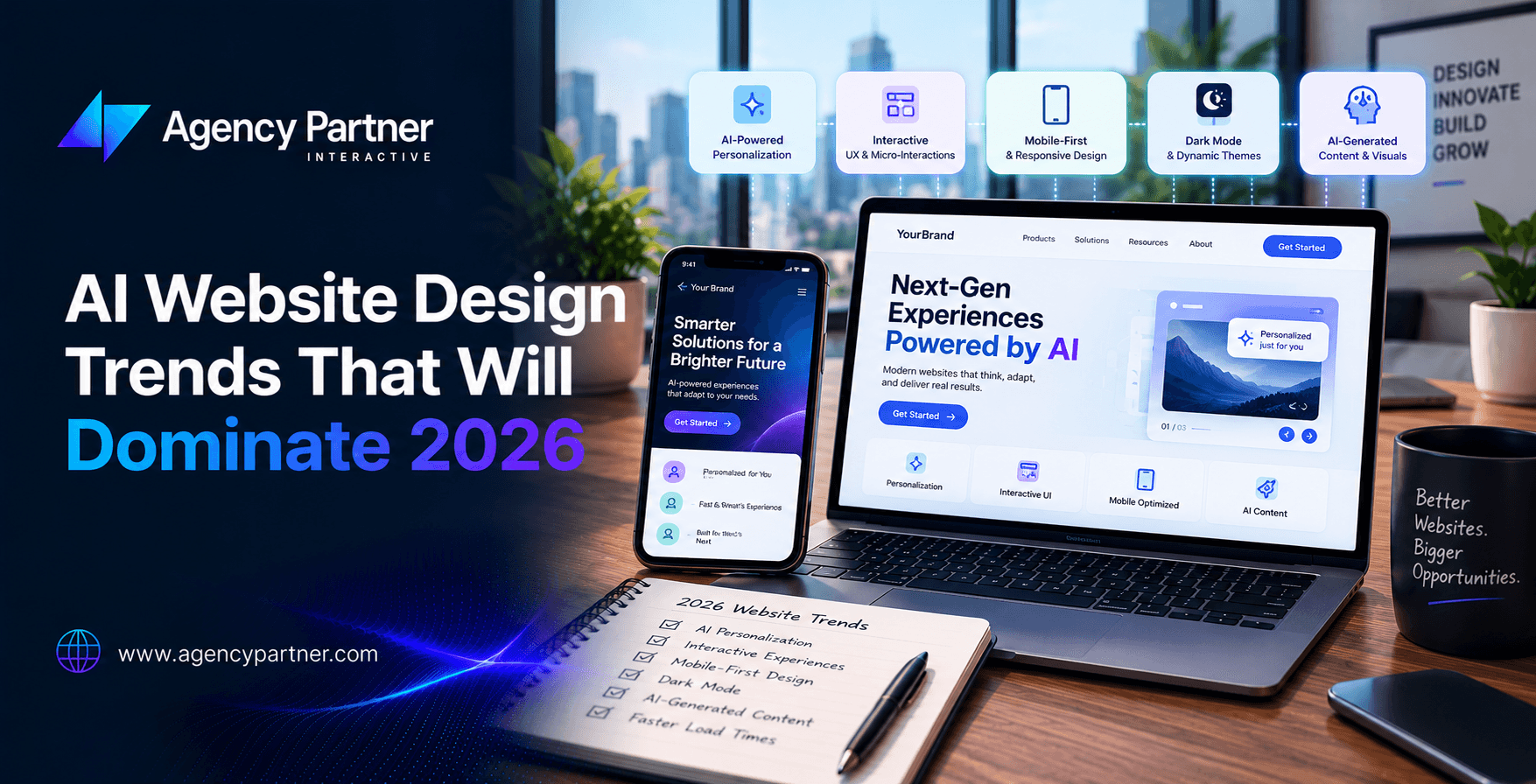
Users form an opinion about your website in 50 milliseconds. Not seconds, milliseconds. That’s faster than a blink. In that half-second, they decide whether your site looks credible, modern, or worth staying on. And in 2026, what looks modern has changed significantly.
93% of web designers now use AI tools in their workflows. The global web design market is worth $60.9 billion. The AI website builder segment alone grew to $3.24 billion this year, up 20% from 2025. Design is no longer just about aesthetics.
It’s infrastructure. And the businesses that understand the latest web design trends are building faster, converting better, and outperforming those still working from 2022 playbooks. Here are the web design trends that are actually shaping business outcomes in 2026, not just what looks good, but what works.
1. AI-Generated Layouts- With Human Editing Built In
This is the defining trending web design shift of 2026. 51% of web designers now use AI to generate page layouts. AI tools can prototype a homepage, an ecommerce product page, or a landing page in minutes. What used to take days of wireframing now takes an afternoon.
But here’s the catch. 94% of designers still review and refine AI-generated outputs before publishing. Why? Because AI-generated designs have a visible sameness to them. The slightly-too-smooth gradients. The familiar layout cadence. Users are getting good at spotting it, and distrust follows.
The modern web design trend isn’t “let AI design everything.” It’s “let AI draft, let humans refine.” Businesses that hand off entirely to an AI builder often end up with a site that looks like every competitor’s. Businesses that use AI as a starting point and add intentional, brand-specific design decisions come out with something that converts.
What this means for your website: If you’re using an AI builder for an informational page, it may be enough. If you’re using it for an ecommerce store or a service business that competes on brand, you need custom decisions on top of the AI draft.
2. Bento Grid Layouts
One of the clearest trending web design websites patterns of 2026: the Bento grid. Named after the Japanese bento box, this layout divides a page into modular, asymmetric card-based sections. Each card is self-contained. Together they create a dense, scannable, visually interesting structure. Apple popularized it with their product pages. Startups and SaaS brands picked it up. Now it’s everywhere.
Why it works: it answers the biggest UX challenge in web design, showing a lot of information without overwhelming the visitor. Cards create visual breathing room. The asymmetry keeps the eye moving.
The modularity makes it easy to update individual sections without rebuilding the page. Sites with modern, minimal design see 40% higher engagement compared to cluttered alternatives. Bento grids deliver that combination, visual density without visual chaos.
3. 3D Visuals and Immersive Product Experiences
This is where ecommerce website design services are making the biggest revenue impact. Websites with 3D product visualization see conversion lifts of up to 40%. Augmented reality (AR) is projected to drive $6 billion in e-commerce sales in 2026. Shoppers who interact with a 3D or AR product view are more confident in their purchase and significantly less likely to return the item.
This is no longer a luxury feature. Furniture brands, footwear companies, and consumer electronics retailers are all using 3D visualization as a standard part of their product pages. The technology has become accessible, Shopify, WooCommerce, and custom-built stores all support WebGL-based 3D viewers.
For ecommerce businesses, this is one of the graphic design trends with the clearest ROI data behind it. If your product photography is your primary conversion tool, 3D and AR are the upgrade worth budgeting for in 2026.
4. AI Personalization Engines
Sites using AI personalization engines see revenue growth 15–20% faster than competitors without personalization. This is no longer a trend to watch, it’s active infrastructure in the best-performing ecommerce and SaaS sites.
AI personalization works at the design layer, not just the content layer. It means:
- A first-time visitor sees a different homepage hero than a returning customer
- A shopper browsing running shoes sees different product recommendations than one browsing hiking gear
- A B2B visitor from a known company sees the enterprise pricing message; a startup founder sees the growth plan message
This is a modern web design trend driven by data, not aesthetics. The visual design doesn’t change. The content inside it does. And those personalized experiences drive measurably higher engagement.
AI-driven website traffic converts at 14.2%, compared to just 2.8% from traditional search traffic. That’s a five-fold difference. The sites built to receive and convert AI-referred visitors are the ones with personalization baked into their architecture.
5. Dark Mode as Default
Over 80% of users prefer dark mode on at least one device. By the end of 2026, 90% of users are expected to prefer dark mode designs. This has crossed from a nice-to-have to an expected design option. Users expect to be able to switch. On mobile especially, dark mode reduces eye strain and battery drain. Sites that don’t support it are starting to feel dated.
For businesses, this means designing dual-mode systems, light and dark versions of every UI component, checked for contrast ratios and readability in both states. It’s more design work upfront. It pays off in user satisfaction and time on site.
6. Voice Search Optimization Baked Into Design
Voice search optimization is projected to influence 30% of web traffic in 2026. And it’s not just an SEO task anymore, it’s a design task. Websites designed for voice search structure their content differently. They use question-format headings. They put direct answers at the top of sections.
They use conversational language rather than keyword-dense copy. They load fast because voice search assistants prioritize fast, clean pages.
The trends in web design around voice reflect a broader shift: people are searching with full sentences and natural language. Websites that are designed to answer those questions, structurally, visually, and technically, are the ones that get cited in voice results and AI Overviews.
7. Minimalism With Purpose- Not Just White Space
Sites with cluttered designs see bounce rates 50% higher than clean, simple ones. That’s a significant performance gap tied directly to design decisions. But this isn’t about stripping everything back. The latest web design trends in minimalism are purposeful. Every element earns its place. White space is used to draw attention, not to fill gaps. Visual hierarchy guides the eye to the one action the page is designed for.
A minimalistic redesign in one documented case study drove a 402% traffic increase. Not from SEO changes. Not from new content. From removing the noise and letting the signal through.
Consistent brand colors improve recognition by up to 80%. Visual hierarchy done right can boost conversions by 30%. These aren’t soft branding benefits, they’re measurable business outcomes tied to specific design choices.
How Much Do Website Design Services Cost in 2026?
A common question: how much do website design services cost?
Here’s a realistic 2026 breakdown:
| Service Type | Cost Range |
| AI website builder (DIY) | $15–$50/month |
| Template-based design (agency) | $2,000–$8,000 |
| Custom website design | $8,000–$30,000+ |
| Ecommerce website design | $10,000–$50,000+ |
| Enterprise / complex build | $50,000–$200,000+ |
What are the best website design services? The answer depends on your goals. A brochure site for a local business has different requirements than a multi-SKU ecommerce platform or a SaaS product with user authentication and a dashboard.
The most important variable: whether your website is a marketing expense or a revenue engine. If it’s your primary sales channel, the design investment has a direct ROI. If it’s a credibility anchor for offline sales, a clean mid-range build is usually enough.
The Business Case for Investing in Design Now
94% of first impressions are design-related. Not product-related. Not price-related. Design. 50% of users believe website design reflects a brand’s credibility. And 90% of users leave poorly designed websites. The cost of bad design isn’t the money you spend on it. It’s the customers you never convert.
The web design trends in 2026 are not about chasing novelty. They’re about building experiences that load fast, communicate clearly, and convert confidently, with AI assisting the process and human judgment ensuring the output is worth publishing.
Agency Partner Interactive offers website design services for businesses that need more than a template. From responsive website design services to full ecommerce builds, our team designs and builds websites that are built for performance, not just presentation. See our work.
FAQs
-
What are the biggest web design trends in 2026?
AI-assisted design with human refinement, Bento grid layouts, 3D product visualization, AI personalization, dark mode support, and voice search optimization are leading the field.
-
How does AI affect modern web design trends?
93% of web designers now use AI tools for layout, imagery, and testing. AI accelerates design production but still requires human review, 94% of designers edit AI outputs before publishing.
-
What are ecommerce website design services?
Services that design and build online stores optimized for product discovery, mobile checkout, and conversion, including 3D visualization, personalization engines, and performance optimization.
-
How much do responsive website design services cost in 2026?
Responsive website design from a professional agency typically ranges from $5,000 to $30,000+ depending on complexity, integrations, and custom functionality required.
-
What is the difference between a website design company and an AI website builder?
A website design company builds custom, strategy-driven experiences tailored to your brand and audience. AI builders generate template-based sites quickly at lower cost, best for simple use cases with limited customization needs.
-
Why does minimalist design improve conversions?
Cluttered websites see bounce rates 50% higher than clean ones. Minimalist design removes visual noise, focuses attention on key CTAs, and creates the perception of credibility, directly impacting how long visitors stay and whether they convert.